China Has Locked In Five More Years of Clean-Energy Scale — and Southeast Asia Is Downstream
China's 2026–2030 carbon-peaking plan sets hard targets that keep its clean-energy industry building at full output — with export capacity increasingly aimed at Southeast Asia's power build-out.
On 9 July, China’s State Council issued a carbon-peaking action plan that fixes the trajectory of its clean-energy industry through 2030.
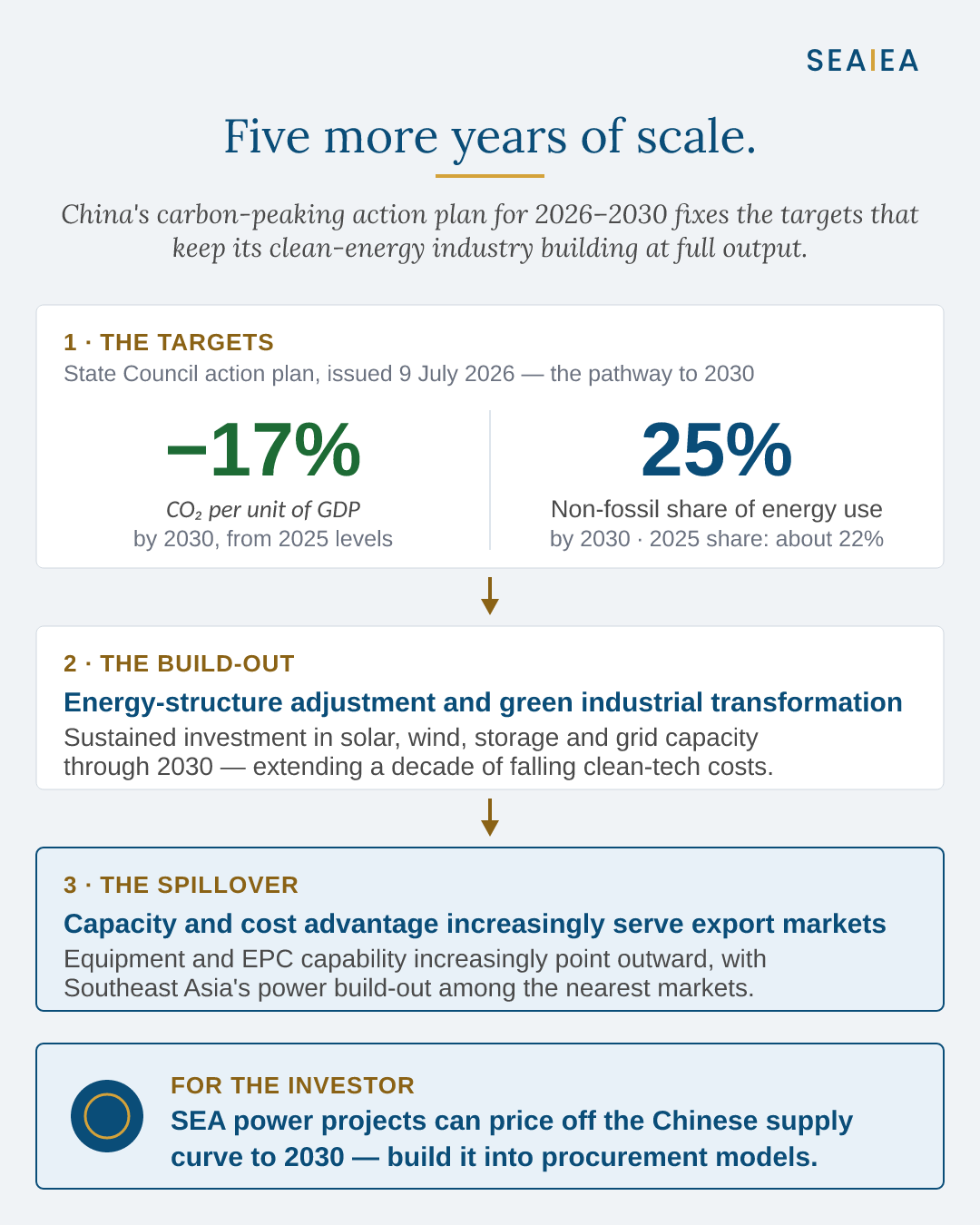
The read. The headline targets — a 17% cut in carbon intensity and a 25% non-fossil share of energy by 2030 — matter less as climate numbers than as an industrial signal: Beijing has committed to another five years of solar, wind, storage and grid build-out. That sustained demand is what keeps China’s clean-tech supply chain running at full output and its costs falling.
What to watch. The spillover is the part that reaches Southeast Asia. As Chinese equipment and EPC capacity increasingly serve export markets, SEA power projects can increasingly price off the Chinese supply curve through 2030 — a variable worth building into procurement assumptions rather than treating as a passing advantage.
Get The Weekly Read every week
ASEAN investment commentary, free to subscribers.