Vietnam raises wages and cuts red tape: selling position, not price
In one fortnight Hanoi raised the minimum wage 7.8% and cut business red tape — a bet that investors now buy Vietnam's trade-deal access and position, not its low wages. The money agrees.
In one fortnight Hanoi raised the price of labour and cut the price of bureaucracy — a bet that investors now buy Vietnam’s position, not its low wages.
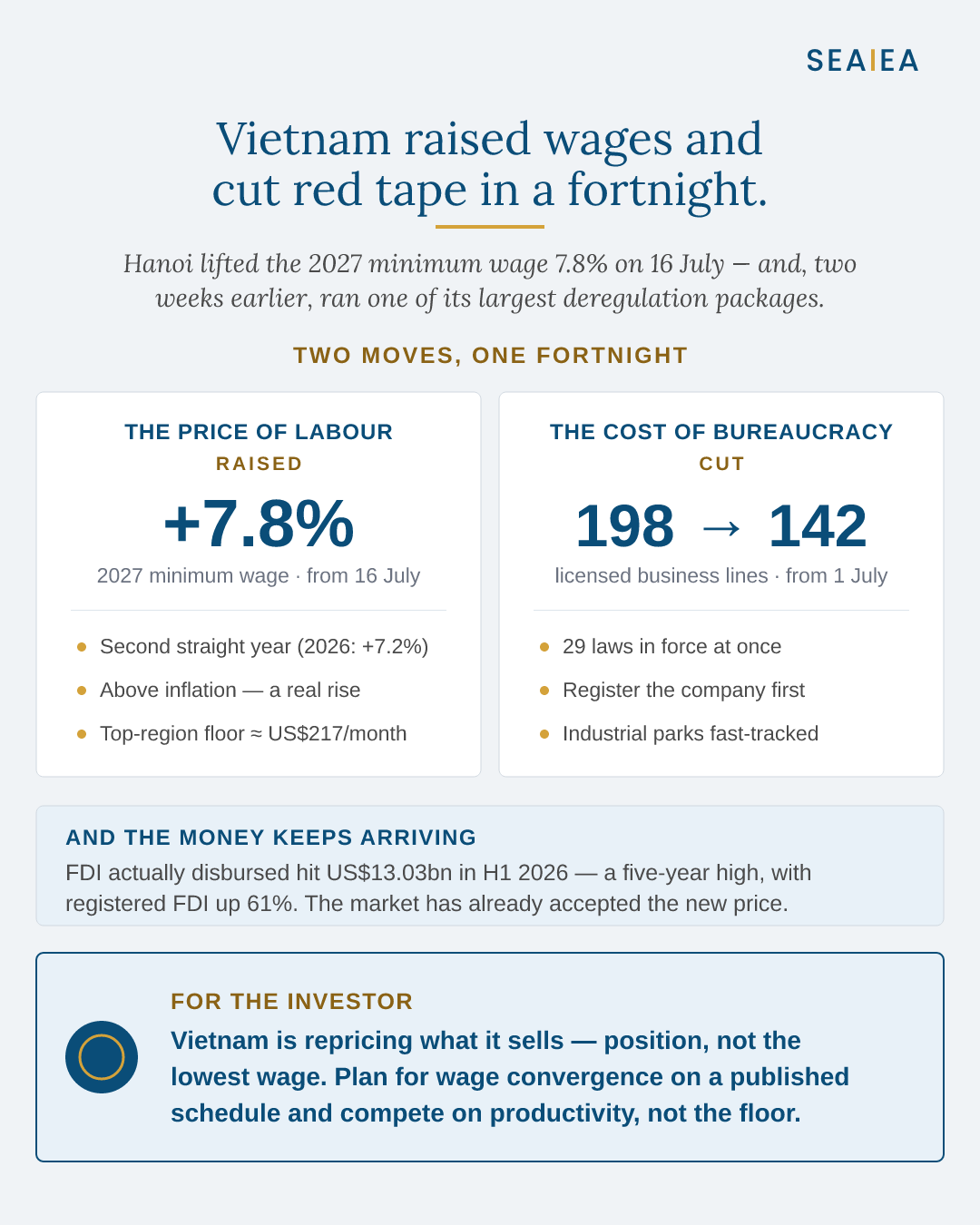
The read. A 7.8% minimum-wage rise for 2027 — the second real-terms rise running — looks like an own goal for the region’s cheap-labour factory floor. It isn’t. Market wages already sit well above the legal floor, so the decree’s real work is signalling: Hanoi wants foreign production to convert into Vietnamese income — the metric behind its 2045 high-income goal — and higher pay is its most direct lever. Paired with a deregulation package that cut licensed business lines from 198 to 142, the message is that Vietnam now sells access — a base wired into seventeen trade agreements — not the lowest wage.
What to watch. The buyers have accepted it: disbursed FDI hit a five-year high in H1 2026, manufacturing taking most of the new capital. If you’re building a supply chain here, treat the cheap-labour discount as retiring on a published schedule and compete on productivity and position. The one risk to police: enforcement of what “Made in Vietnam” means — the transshipment tariff is the reminder.
Get The Weekly Read every week
ASEAN investment commentary, free to subscribers.