The EU Is Quietly Signing Up Southeast Asia
Southeast Asian factories become the gateway to the EU — for those who make, not just assemble.
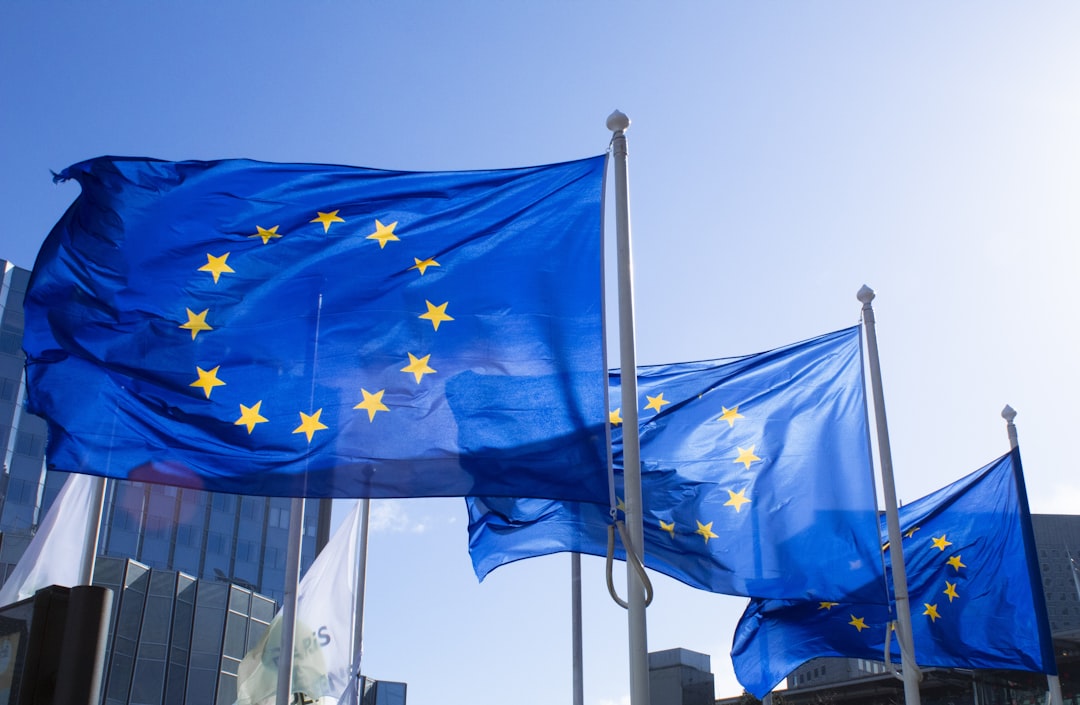
On 29 June the European Commission sent the EU–Indonesia trade agreement to the Council to be signed. It will eventually remove duties on more than 98 per cent of the tariff lines traded between the two sides, open EU investment in Indonesian electric vehicles, electronics and pharmaceuticals, and take effect around the start of 2027. Taken by itself it is a modest milestone. What makes it worth a closer look is the pattern it completes.
The day after, Thai and European negotiators closed another chapter of their own talks in Brussels, both sides hoping to finish this year. Singapore and Vietnam have had their agreements in force for years. Malaysia and the Philippines are still at the table, and the EU’s trade commissioner has said he expects all three remaining deals done in 2026. Once they are, Europe will hold free-trade agreements with the six largest economies in Southeast Asia.
The EU is neither the American nor the Chinese market, but it is hardly a consolation prize — 450 million people, around €18.8 trillion in output, roughly a sixth of the world economy, and a home to manufacturers and consumer brands that increasingly treat Southeast Asia as both a place to source from and a market to sell into. For any company with a factory in the region — Japanese, Korean, European, American or Chinese — that recasts what the factory is for. A base built mainly to serve the United States, or to hedge around its tariffs, quietly acquires a second reach, into Europe.
The benefit, though, is not automatic, and the condition attached to it is the thing that matters. EU agreements grant their tariff preferences on the basis of origin — where a good is genuinely made — not where it is shipped from. To qualify, a product has to be transformed enough inside the partner country to change its tariff classification or clear a value-added threshold, with only a small margin allowed for foreign parts. A shirt cut and sewn in Vietnam from Chinese fabric stays Chinese as far as the rules are concerned; a device assembled from ninety per cent Chinese components will not pass either. The test bites any manufacturer whose inputs mostly come from outside the region — and it bites firms relocating from China hardest of all, because so much of what goes into their goods still begins at home.
How you meet it varies from country to country. Indonesia has, in a sense, arranged the answer in advance: its 2020 ban on exporting raw nickel and its downstreaming policy, hilirisasi, require ore to be smelted and refined on Indonesian soil — the kind of deep processing that satisfies origin rules almost by definition, so nickel and battery materials made there can count as Indonesian. Vietnam gets there through its electronics and textile industries, Malaysia through the semiconductor plants around Penang. Thailand and the Philippines illustrate the opposite risk: “zero-baht” factories that only bolt together imported parts, and a Philippine electronics sector built heavily on assembly and testing, often add too little to qualify. A large export figure is not the same as originating content.
There is also a mechanism that could eventually knit these deals together, known as cumulation, which lets materials from one EU partner count as originating in another. Korean fabric, for example, already counts as Vietnamese under the EU–Vietnam agreement, because Korea has its own deal with Brussels. As the EU finishes signing up the region, a manufacturer could in principle spread its value-added across several Southeast Asian countries and still qualify. For now that is more theory than practice — the regional provisions are barely used — but it shows where things are heading.
For any manufacturer, then, the lesson in a Brussels document about Indonesia is fairly plain. Make things properly in Southeast Asia — actually produce them there, rather than finishing them for export — and a second large market opens up alongside the United States. Who owns the factory is beside the point: a foreign-owned plant qualifies if the real work happens on site, and a stake in a local firm counts for nothing if it does not. And origin is only the first hurdle. Europe’s carbon border levy on metals and its new battery rules land hardest on exactly the resource-heavy goods — nickel, batteries — that are easiest to qualify in the first place.
The door into Europe is real, and it is opening right across the region. But a Southeast Asian postmark will not get you through it. Only a Southeast Asian product will.
Get The Weekly Read every week
ASEAN investment commentary, free to subscribers.