China curbs new battery capacity, and the next plant looks to Southeast Asia
China has raised the cost of lithium-ion cells and frozen approvals for new energy-storage battery plants, making the next round of capacity more likely to look offshore, in particular to Southeast Asia.
In a single week, China both raised the cost of making battery cells and stopped approving new plants to make them.
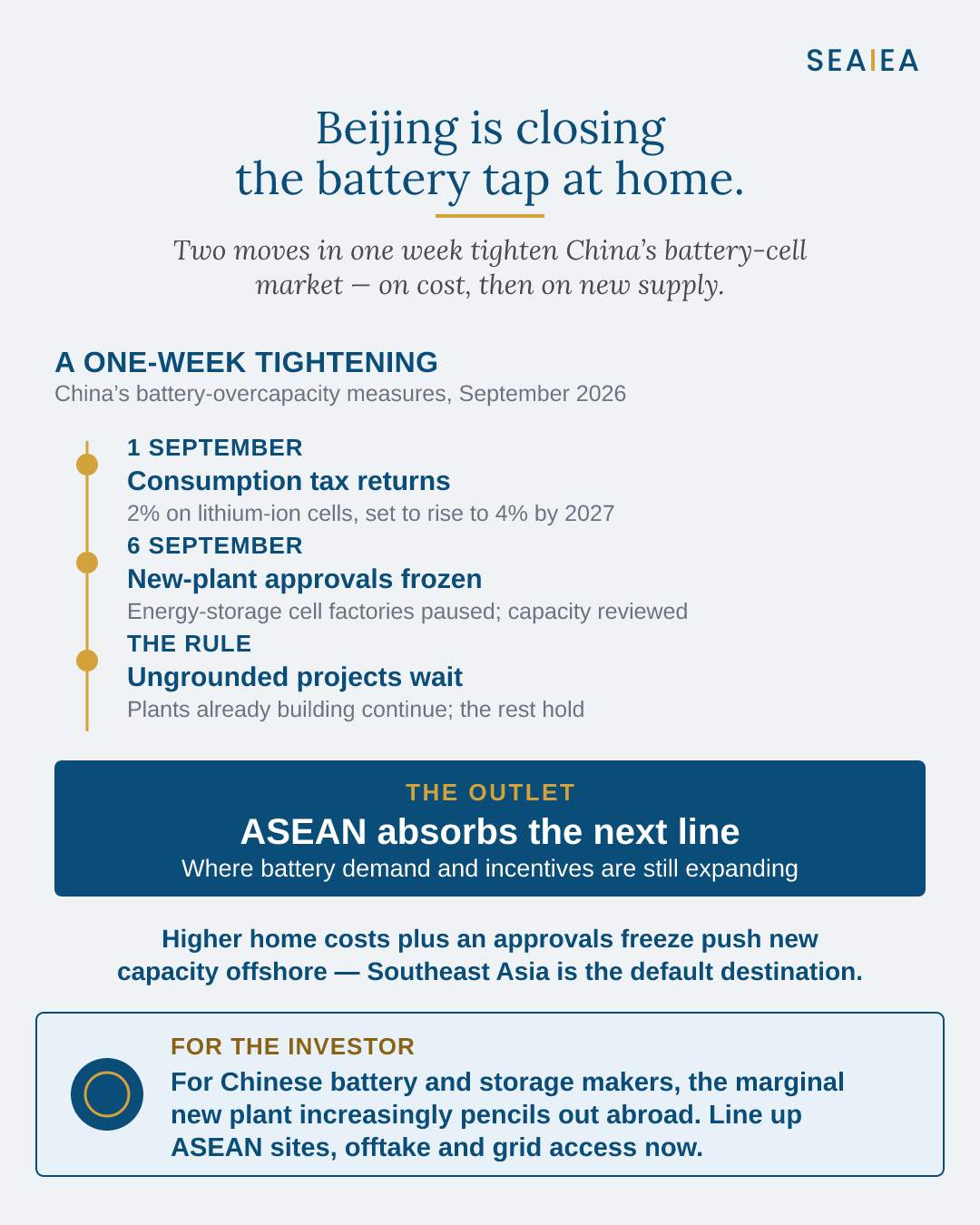
The read. China moved on its battery sector twice in the space of a week. A 2% consumption tax on lithium-ion cells took effect on 1 September and is due to rise to 4% by 2027. Five days later, regulators froze approvals for new energy-storage cell plants and announced a review of existing capacity. Factories already operating and projects under construction are unaffected, so this is not a retreat from China’s battery industry. It is a brake on further expansion at a time when the sector already has substantial excess capacity. For manufacturers planning their next production line, that changes the calculation: building more capacity in China has become harder and slightly more expensive, while Southeast Asian markets still offer investment incentives and growing demand for grid storage.
What to watch. The first signs should appear in site selection rather than production numbers. Malaysia, Indonesia and Thailand are natural candidates for Chinese manufacturers looking for their next plant, particularly where local incentives can be combined with grid-storage demand and access to regional markets. New investment applications, land purchases, offtake agreements and grid connections will show whether China’s capacity controls are actually pushing the next round of battery investment into Southeast Asia.
Get The Weekly Read every week
ASEAN investment commentary, free to subscribers.