From Spice Routes to Data Routes
Why the AI era may be rewarding strategic geography once again — as data centres cluster around the Singapore–Johor corridor, Southeast Asia's oldest advantage is reasserting itself.
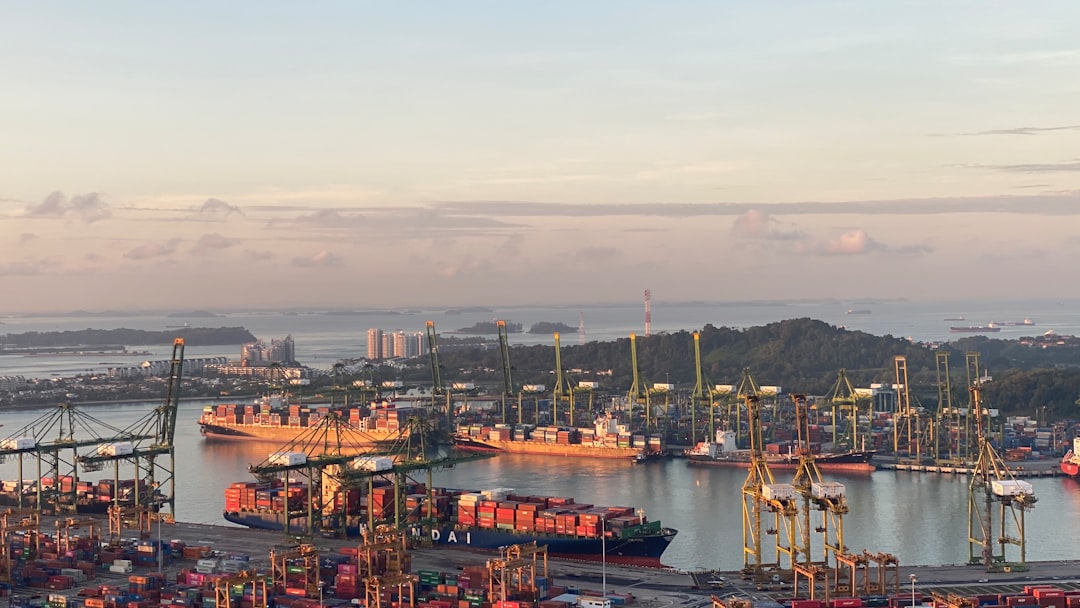
Right now, Singapore and Johor are in the middle of a technology and data center boom.
Singapore is extending its long-standing role as Southeast Asia’s leading financial and technology hub into cloud services and AI-related activity. Just across the causeway, Johor is attracting wave after wave of data center investment. Part of this growth reflects Johor’s own advantages in land, energy, and connectivity, but it has also been accelerated by Singapore’s increasingly constrained capacity for large-scale data center expansion.
Further north, Penang remains one of Southeast Asia’s most important electronics and semiconductor hubs, while neighboring Kedah is emerging as part of a broader industrial ecosystem linked to these supply chains.
Taken together, a relatively small area around the Strait of Malacca is becoming one of the most important pieces of digital infrastructure in Asia.
To many outsiders, this may seem surprising. Southeast Asia is often viewed as being on the periphery of the technological world rather than at its center. When people talk about artificial intelligence, they usually think of Silicon Valley, Shenzhen, or perhaps Bangalore. Southeast Asia rarely features prominently in the conversation.
But if we strip away the modern buzzwords, there is actually a much older story underneath.
Southeast Asia has always been a region of flows.
For centuries, goods from China, India, the Middle East, and Southeast Asia itself moved through the region’s ports and maritime routes. Cloves, nutmeg, camphor, textiles, ceramics, precious metals, and countless other products passed through its trading networks. The region’s importance did not arise solely from what it produced. Rather, it came from its position between major economic centers and, just as importantly, from the ability of its ports and kingdoms to create environments that encouraged trade, exchange, and interaction.
In many respects, that pattern continues today.
Oil and gas from the Middle East pass through Southeast Asian waters on their way to East Asia. Manufactured goods move through the region’s ports toward global markets. Capital, talent, tourists, and technology circulate through its economies. The nature of the flows has changed, but the region’s role as a connector remains remarkably persistent.
Increasingly, one of the things flowing through the region is data.
We often talk about “the cloud” as though information simply floats around in cyberspace. In reality, data is surprisingly physical. It travels through submarine cables, fiber networks, power systems, and data centers. Information may be digital, but the infrastructure supporting it is very real.
Viewed from this perspective, the emergence of Singapore and Johor as a digital hub may be less surprising than it first appears.
The Strait of Malacca has long been one of the world’s most important arteries of exchange. Today, alongside the ships carrying physical goods, there is a growing network carrying information. Different technologies are involved, but the underlying logic is not entirely unfamiliar.
In some ways, modern data centers occupy a place within digital networks analogous to the role that warehouses, trading depots, and other commercial infrastructure once occupied within historical trade networks. Not because they perform identical functions, but because they support broader systems of movement, processing, storage, and exchange. A merchant storing spices in a godown in historical Malacca and a company operating a modern data center in Johor are participating in very different economies, yet both depend on infrastructure that facilitates wider networks of commerce and connection.
At the same time, geography alone has never been enough.
Historically, the ports and kingdoms that successfully captured trade were not merely well located. They also provided security, efficient administration, commercial opportunity, and a degree of openness to foreign merchants and ideas. Traders had choices. The most successful ports were often those that made it easiest and safest to do business.
The same principle applies today.
Data does not automatically stop wherever a submarine cable lands, just as merchants did not automatically stop at every harbour along a trade route. The regions that succeed in attracting digital infrastructure must also provide abundant energy, reliable connectivity, investment certainty, and the institutional capacity needed to support long-term investment.
In other words, they must create an environment where the flow wants to stop.
This may be one reason why the Singapore-Johor corridor has emerged so quickly. Geography provides the opportunity, but infrastructure, governance, and investment-friendly policies help convert that opportunity into reality. The recent boom is also a reminder that strategic advantages often emerge from the interaction between structural factors and specific policy decisions.
The AI era is often described as though geography matters less than before. Information can move instantly across continents, software can be developed remotely, and digital services appear detached from physical space.
Yet much of the infrastructure supporting this digital economy remains surprisingly tied to geography. Data still requires cables. AI still requires power. Data centers still require land, cooling, capital, and connectivity.
Rather than eliminating the importance of place, the digital economy may be rewarding a different set of geographic and institutional advantages. Access to land, energy, connectivity, talent, and effective governance may matter just as much in the age of AI as secure harbors, merchant networks, and commercial openness mattered in earlier eras.
Singapore and Johor are perhaps the clearest example of this today, but they are unlikely to be the last. Thailand, Indonesia, and Vietnam all possess some combination of growing markets, energy resources, strategic locations, and expanding digital infrastructure. Each faces its own constraints and opportunities, but all are likely to play some role in the region’s evolving digital landscape.
For centuries, Southeast Asia has occupied a position between larger economic centers. The goods moving through the region have changed repeatedly over time, from spices and ceramics to oil, manufactured products, and now data.
The cargo keeps changing, but the challenge remains much the same: creating places where valuable flows choose to stop.
Get The Weekly Read every week
ASEAN investment commentary, free to subscribers.