Not Every Chinese Company Belongs in the Singapore-Malaysia Tech Corridor. Here's Who Does.
The Johor-Singapore corridor is open to some Chinese companies and effectively closed to others. Order 837 decides which is which.
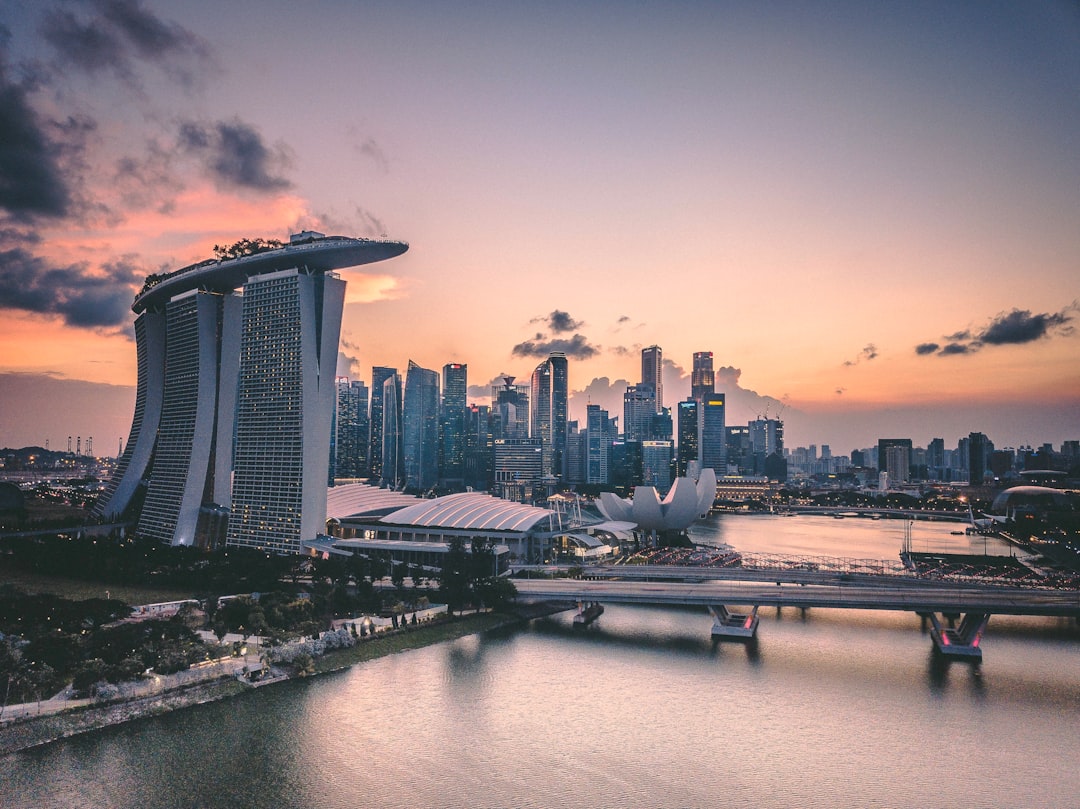
On 10 June 2026, Applied Materials announced a US$500 million expansion of its Tampines Campus in Singapore, more than doubling its advanced cleanroom capacity. The facility is already operating at volume production. This is not a bet on a future that might arrive; it is investment in a present that is already here.
The announcement is best understood as the latest in a sequence that has been building for several years. The Johor-Singapore Special Economic Zone (JS-SEZ), launched in March 2026, offers a 5% corporate tax rate for up to fifteen years against Malaysia's standard 24%, with a division of labour across the border: research, IP, equipment, and headquarters in Singapore; manufacturing, packaging, and scale production in Johor. The Rapid Transit System connecting the two cities will open by year-end. Johor has recorded approximately US$23 billion in approved investments. A major Chinese semiconductor company is reported to be in advanced discussions to anchor the JS-SEZ. Further north, Penang — which accounts for roughly 80% of Malaysia's semiconductor exports and hosts more than 80 Chinese companies among its 350-plus multinationals — extends the corridor to its natural northern limit.
What makes this corridor genuinely distinctive is not any single deal but the foundation it is built on. Singapore and Malaysia share a legal tradition, English as a common working language, and business norms shaped by decades of proximity. One provides the R&D institutions, financial infrastructure, and corporate expertise that large-scale manufacturing requires; the other provides the land, workforce capacity, and industrial depth that Singapore cannot. The corridor formalises what geography and shared history already implied.
It would be natural for Chinese companies to want to participate — and many already are. But State Council Order 837, which takes effect on 1 July, has specific implications for this corridor that the investment headlines have not fully reflected. The regulation captures what practitioners call the "Singapore Wash" — contributing core technology, IP, or data to a Singapore or Cayman holding entity and treating the result as an offshore structure. It is not. Chinese regulatory authority follows those assets regardless of where the holding entity is incorporated. Article 13 extends this further: technology transfer through licensing or personnel deployment is captured even without an equity component.
What this means in practice depends on the type of company. For established Chinese semiconductor companies whose competitive advantage is proprietary technology, the door many had assumed was open is now closed. The compliant option is a Chinese-standard operation — Chinese-approved equipment, Asian markets, no reliance on supply chains that require regulatory clearance from other jurisdictions. The corridor is a genuine platform for Asian demand on these terms. But it is not a bridge between ecosystems, and it should not be planned as one.
For a different category of Chinese company, the corridor is more open than the regulatory headlines suggest — and may be a more natural fit than anywhere else in the region. Legacy chip producers at mature nodes, substrate and leadframe manufacturers, chemical and materials suppliers, test and handling equipment companies, precision components makers: these firms are not making anything restricted. Their technology can travel without triggering Article 13, and a genuinely bifurcated structure — separate IP, separate governance, no technology transfer from the Chinese parent — is achievable for them not as a legal manoeuvre but as a straightforward description of how their business already works. The corridor needs them too: Penang's ecosystem has absorbed significant headline investment but its mid-tier support infrastructure remains underdeveloped relative to the manufacturing volume flowing in. A Chinese substrate maker or precision components company arriving in Penang is not competing with an established player. It is filling a genuine gap.
Malaysia and Singapore are not asking Chinese companies to make a difficult choice — they are asking them to make a clear one, and to make it before they invest rather than after. The corridor is most compelling for those who already know what kind of business they are building. Those who do not will find that the regulation they did not read will decide for them.
Get The Weekly Read every week
ASEAN investment commentary, free to subscribers.