The World Bank Raised Southeast Asia’s Growth Outlook. AI Hardware Is Why.
The World Bank's October upgrade for Vietnam, Malaysia and Thailand rests on AI hardware exports, so how much of the boost the region keeps depends on how deep its manufacturing goes while demand lasts.
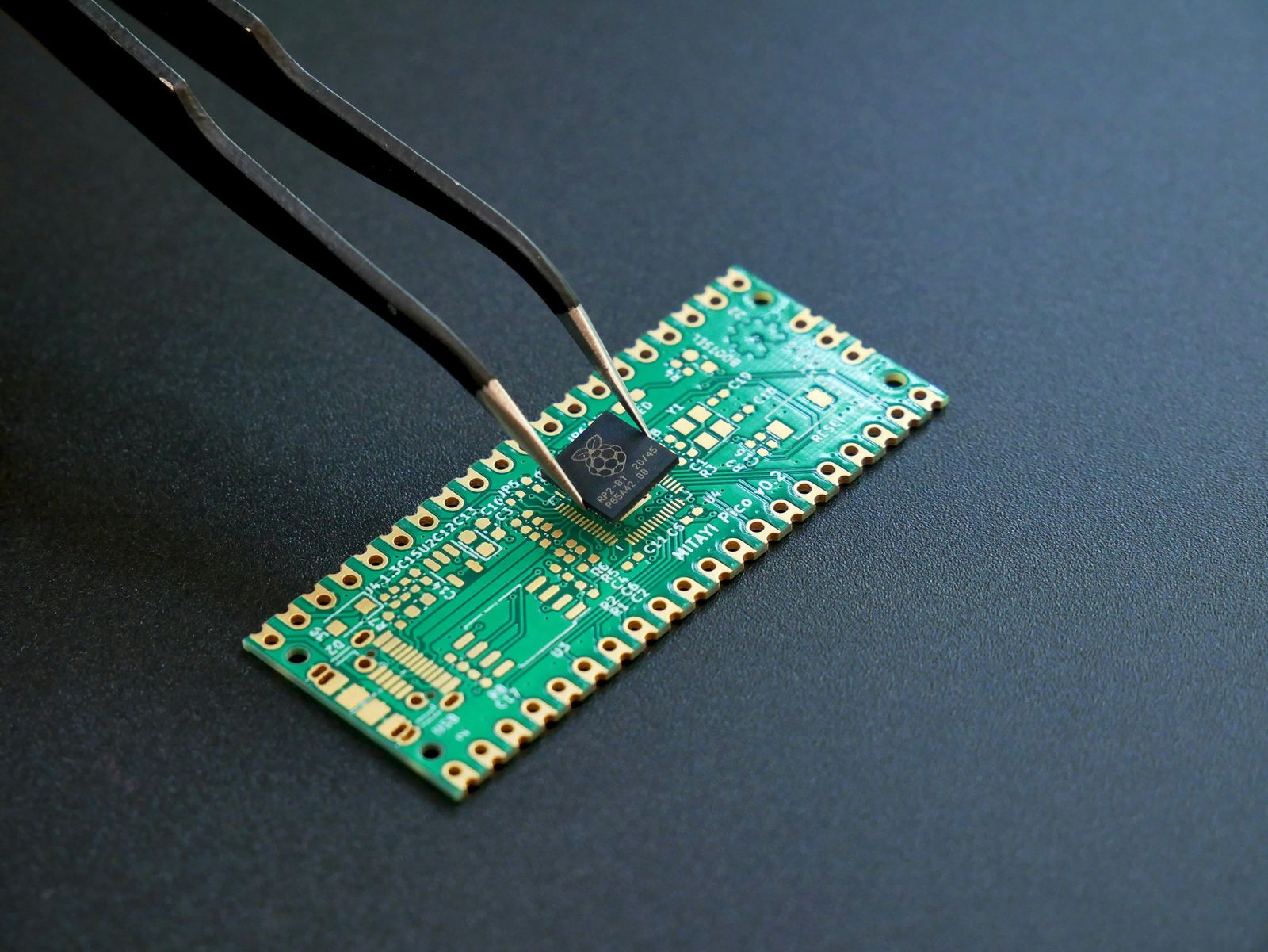
On 6 October, the World Bank raised its 2026 growth forecasts for Vietnam to 7.4%, Malaysia to 5.1% and Thailand to 2.0%. All three upgrades were driven by the manufacture and export of hardware for the global build-out of AI. According to the World Bank’s report, AI-related goods accounted for more than 70% of export growth in Malaysia, the Philippines, Thailand and Vietnam, while trade in everything else was weak. That distinction matters because the forecasts are being lifted by goods the region sells into the global AI investment cycle, not by broad productivity gains from businesses across Southeast Asia applying the technology. How long the boost lasts, and how much remains in the region, will depend on the depth of the manufacturing behind those exports.
The economic gains from AI can come from hosting data centres, manufacturing the equipment they contain, or applying the technology across the wider economy. The World Bank’s upgrade reflects almost entirely the manufacturing channel.
Data centres receive most of the attention, with good reason. They are the foundation on which the rest of AI is built, but they also consume a great deal of land and power. Malaysia expects peak data-centre demand on the peninsula to rise from 849 megawatts at the end of 2025 to about 4,800 megawatts by 2030, and now approves new projects only where their power is secured. Thailand’s Board of Investment stopped approving new ones in April while a policy committee develops unified rules.
The hardware supply chain has a broader industrial footprint. Making chips, power modules and other components creates demand for engineers, local suppliers and technical training. Malaysia already handles about 13% of the world’s chip packaging and testing, and its semiconductor strategy aims to train 60,000 engineers. In Thailand, Infineon opened the first of five planned modules of a US$1.4 billion power-chip complex on 1 October. Vietnam exported US$107.75 billion of computers, electronics and components last year, but much of that involved assembling imported parts. Its own strategy targets domestic value added of 10–15% by 2030, acknowledging that a large export figure is not the same as a large domestic contribution. Raising that contribution means bringing more engineering, testing, packaging and component production into the country.
The risk is that today’s demand may not last. The World Bank warns that a reversal in AI investment would remove a key pillar of growth. It also notes that US$800 billion of the US$2.9 trillion planned for AI worldwide in 2025–2028 is expected to come from private credit, a market that has already seen defaults this year. The ASEAN+3 Macroeconomic Research Office calculated in July that a slowdown in technology investment to its 2024 pace could cut regional growth to 2.5% in 2027.
These plants are built in phases, so the host economy’s gain depends on how much of the plan survives the cycle. Infineon’s expected 5,000-plus jobs come at about 1,000 per phase. If the project stops after its first module, Thailand receives only about a fifth of them. Malaysia has already encountered the same risk at Intel’s Penang project. After heavy losses in 2024, the company put on hold the wafer-fabrication and advanced-packaging complex that Malaysia had counted on to help move beyond assembly and testing, and moved engineers from Penang to New Mexico. The project is now resuming, but only after the downturn delayed exactly the deeper manufacturing stage Malaysia was trying to secure.
Southeast Asia will keep the industrial capabilities it builds during this run of strong orders. The deeper those capabilities become, the more of the AI economy will remain in the region after demand softens, and the closer it will move to designing and using the technology rather than only building the hardware.
Get The Weekly Read every week
ASEAN investment commentary, free to subscribers.