Manufactured exports outpaced tropical-fruit imports on the China–Laos Railway
Faster growth in manufactured exports is strengthening the case for logistics, warehousing and onward connections in Laos and northern Thailand.
Mechanical and electrical exports grew 58.4%; Southeast Asian tropical-fruit imports rose 12.3%.
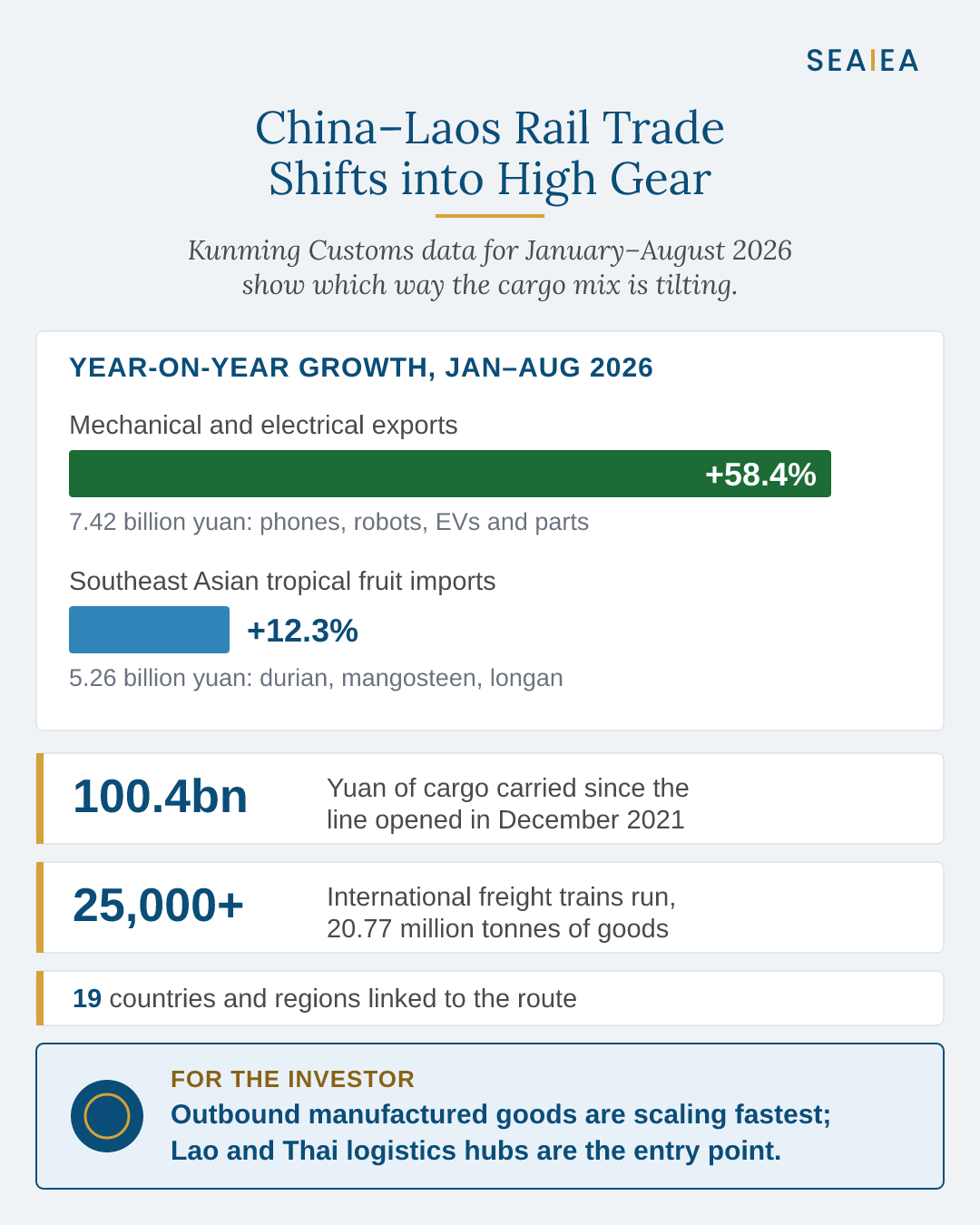
The read. The China–Laos Railway is developing into a two-way commercial corridor rather than a route dominated by a single type of cargo. During January–August 2026, mechanical and electrical exports—including phones, industrial robots, electric vehicles and parts—rose 58.4% year on year to 7.42 billion yuan.
Southeast Asian tropical-fruit imports also increased, but more slowly. Imports of products including durian, mangosteen and longan rose 12.3% to 5.26 billion yuan. These figures compare growth rates and values within the two reported categories; they are not shares of the railway’s total cargo.
Since opening in December 2021, the line has carried more than 20.77 million tonnes of goods worth over 100.4 billion yuan. More than 25,000 international freight trains have operated along a network linking 19 countries and regions.
What to watch. The faster growth of manufactured exports strengthens the case for distribution centres, bonded warehousing and cross-border logistics capacity in Laos and northern Thailand. Customs efficiency and onward connections will determine how much traffic those locations retain.
Agricultural trade creates a different infrastructure requirement. Cold-chain facilities, inspection capacity and predictable border clearance will be necessary if growing fruit volumes are to move without higher spoilage and delay.
Get The Weekly Read every week
ASEAN investment commentary, free to subscribers.